OUTDOOR LIGHTING | Light done right transforms public spaces
When the weather is favorable, communities often experience a noticeable increase in outdoor activities. As temperatures rise and skies clear, people are drawn out of their homes and into shared spaces. Evening strolls through neighborhood parks become a common sight, with families and individuals enjoying the fresh air and open environment. At the same time, local eateries and outdoor cafes see a rise in late-night gatherings, where friends and colleagues extend their conversations into the evening hours. This vibrant energy not only enlivens public spaces but also fosters a sense of connection among residents.
However, with this increase in activity comes the responsibility of ensuring public safety. As more people gather outdoors after sunset, the importance of a well-maintained and secure environment becomes even more critical. Among the many elements that contribute to safety in public spaces—such as clear sightlines, accessible pathways, and active community engagement—one of the most fundamental and effective tools is proper lighting.
Effective lighting does more than simply illuminate dark areas—it actively shapes the way people experience and interact with their surroundings. Strategically placed, high-quality lighting improves visibility, making it easier for pedestrians to navigate sidewalks and for drivers to see potential hazards or obstacles. This enhanced visibility can significantly reduce the likelihood of accidents and incidents, particularly in areas with high foot traffic or complex road layouts.
Beyond safety, lighting also plays a psychological role in shaping perceptions of security. Well-lit environments tend to feel safer, encouraging more people to use public spaces after dark. This increased presence of law-abiding citizens can, in turn, act as a natural deterrent to criminal behavior. Areas that are brightly lit and frequently used are less likely to become hotspots for illicit activity, as the risk of being seen and identified is much higher.
Thoughtfully designed lighting schemes can also contribute to the social and economic vitality of a community. By making streets, pedestrian plazas, and parks more inviting after dark, lighting encourages extended hours of activity. This can lead to increased foot traffic for local businesses, especially restaurants, cafes, and retail shops that benefit from evening commerce. Moreover, lighting that enhances the aesthetic appeal of public spaces can foster a sense of pride and identity among residents, strengthening community bonds.
In this article, we will explore how LED technology has emerged as a powerful solution for enhancing public safety and improving the functionality of urban spaces. We will examine the ways in which LED lighting surpasses traditional lighting methods in terms of efficiency, durability, and performance. Additionally, we will discuss key considerations in lighting design and planning, including the importance of tailoring solutions to the unique characteristics of different neighborhoods. Finally, we will highlight real-world examples where modern lighting has made a measurable difference in improving safety, encouraging social interaction, and supporting local economies.
Urban illumination has evolved significantly with the adoption of LED technology. Unlike older lighting systems that often consumed large amounts of energy and required frequent maintenance, LED lights offer a range of advantages that make them ideal for modern urban environments. Their energy efficiency means that cities can maintain well-lit public spaces without incurring excessive electricity costs. Additionally, LEDs have a much longer operational lifespan than traditional bulbs, reducing the frequency of replacements and lowering long-term maintenance expenses.
Another major benefit of LED lighting is its superior performance in terms of light quality and directionality. LEDs produce bright, focused illumination with high color rendering index (CRI) values, which means they render colors more accurately and improve visibility in both pedestrian and vehicular environments. This clarity is especially important in urban settings where clear sightlines can prevent accidents and enhance overall safety.
However, the successful integration of LED lighting into urban landscapes requires careful planning and collaboration. Lighting design professionals must work closely with urban planners, local governments, and community stakeholders to ensure that lighting solutions are not only effective but also appropriate for the specific needs of each area. For example, residential neighborhoods often benefit from softer, more diffused lighting that minimizes glare and preserves the comfort of residents. In contrast, commercial districts and high-traffic zones may require brighter, more dynamic lighting to accommodate increased activity and ensure visibility for both pedestrians and drivers.
Regulations and local ordinances also play a crucial role in guiding the implementation of outdoor lighting. In residential areas, lighting fixtures are often required to be shielded and positioned in a way that prevents light trespass—unwanted illumination that spills into neighboring properties or windows. These measures help maintain a peaceful living environment while still providing adequate safety lighting. In commercial zones, lighting standards may allow for higher levels of brightness but typically include requirements for directing light downward and limiting spillage into surrounding areas.
By taking into account these various factors—ranging from technical performance to community preferences—cities can implement lighting strategies that enhance safety, support economic activity, and improve the overall quality of life for residents. The transition to LED technology represents not just a technological upgrade, but a meaningful step toward creating safer, more vibrant, and more sustainable urban environments.
UVC Clean Room Led Panel Light factory | How to choose LED panel light
The Advantages of Led Magnetic Track Light
Related Article
Meet the next generation of hotel illumination: DALI Dimmable Aluminum Down Spot Lights (15W-42W)
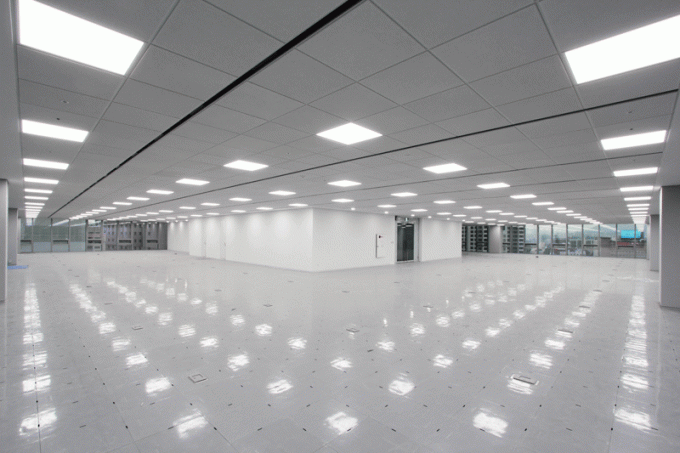
where cutting-edge technology meets elegant design to transform spaces into sanctuaries of light.